
Across cultures and continents, beauty is more than appearance—it’s an expression of harmony, nature, and identity. Every country has its own beauty rituals passed down through generations, blending ancient wisdom with modern wellness.
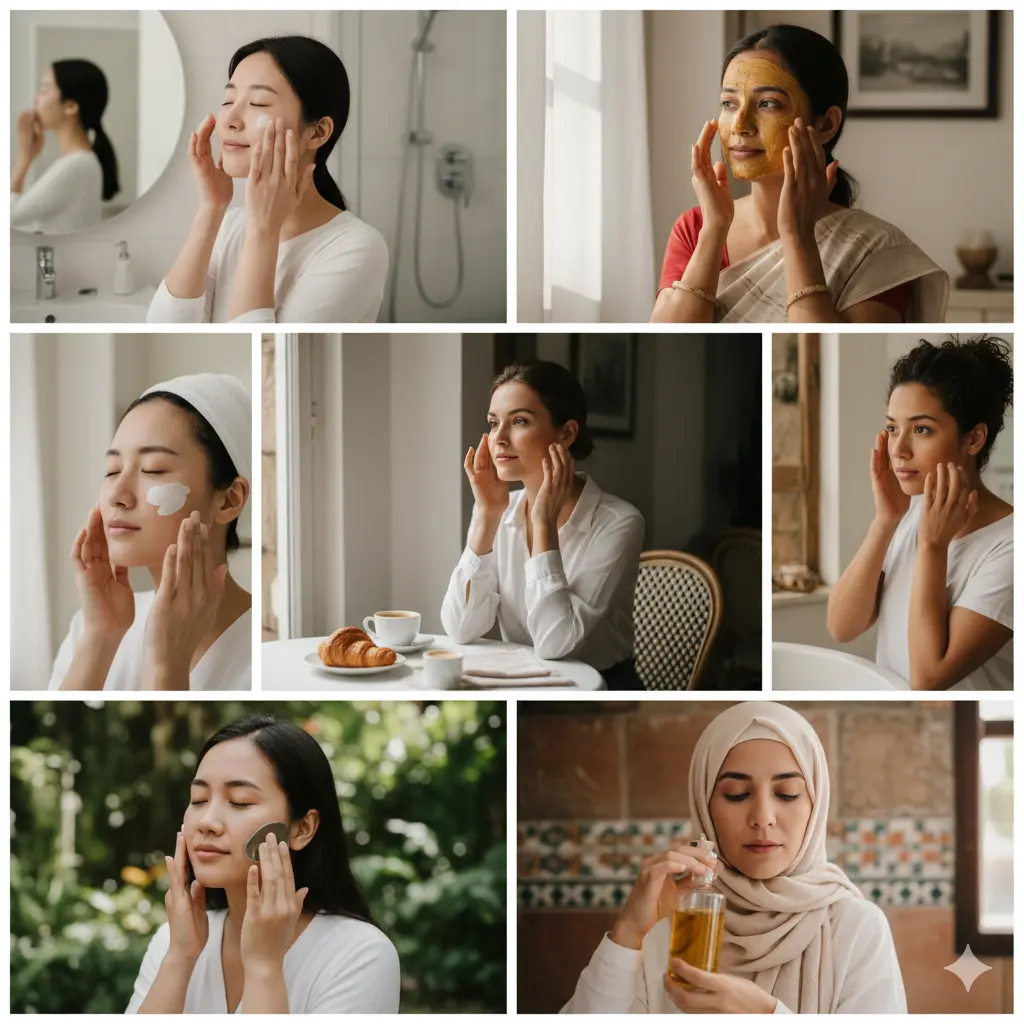
These global beauty rituals remind us that skincare isn’t just about products; it’s about mindfulness, balance, and the connection between body and soul. Let’s explore some of the world’s most inspiring practices and what we can learn from them.
The Korean 10-Step Skincare Ritual
South Korea is often called the beauty capital of the world, and for good reason. The K-beauty philosophy focuses on hydration, layering, and prevention rather than correction.
Key Elements:
- Double cleansing: Oil cleanser followed by foam cleanser to remove impurities.
- Toner & essence: Prep and hydrate the skin.
- Serum & ampoules: Target specific skin concerns like dullness or acne.
- Sheet masks: A hydration boost that leaves the skin plump.
- Moisturizer & sunscreen: Lock in moisture and protect against UV damage.
Lesson to Learn:
Korean beauty is about consistency and self-care. Take time to nurture your skin daily—it’s a form of love and patience.
💡 Related Read: Morning Skincare Rituals for Glowing Skin
The Ayurvedic Beauty Rituals of India
India’s Ayurvedic traditions date back thousands of years and emphasize balance through natural ingredients and mindful practices.
Key Elements:
- Abhyanga (self-massage): Warm oil massages improve circulation and nourish the skin.
- Ubtan masks: Homemade blends of turmeric, chickpea flour, and yogurt used for cleansing and brightening.
- Hair oiling: Coconut or amla oil applied to the scalp to strengthen hair and calm the mind.
- Herbal infusions: Tulsi, neem, and sandalwood are often used to purify and refresh.
Lesson to Learn:
True beauty begins within. Ayurveda teaches that harmony between the mind, body, and environment leads to radiant skin and serenity.
💡 Related Read: Faith & Beauty: Spiritual Self-Care Practices
French Minimalist Beauty Philosophy
French women are known for their effortless glow, achieved through simplicity and self-respect rather than perfection.
Key Elements:
- Fewer products, better quality: Focus on gentle cleansers, hydrating creams, and sunscreen.
- Regular facial massages: Encourage lymphatic drainage and natural lift.
- Diet and hydration: Emphasis on antioxidants, water, and rest.
- No over-exfoliation: Respecting the skin barrier is key.
Lesson to Learn:
Less is more. The French approach values natural beauty, embracing imperfections, and prioritizing skin health over heavy makeup.
💡 Related Read: Nighttime Skincare Routine: Repair While You Sleep
The Filipino Coconut Oil Tradition
In the Philippines, coconut oil—known locally as “gata” or “virgin coconut oil”—is at the heart of beauty and wellness.
Key Elements:
- Skin moisturizer: Used on the body to soften and hydrate.
- Hair treatment: Massaged into the scalp to strengthen hair and add shine.
- Makeup remover: A natural way to dissolve impurities.
- Body scrubs: Mixed with sugar or salt for smooth, glowing skin.
Lesson to Learn:
Nature provides everything we need. Simple, natural ingredients can be incredibly effective when used consistently.
💡 Related Read: Weekly Beauty Rituals to Reset Your Skin
Japanese Skincare Ritual: Purity and Precision
Japanese beauty rituals, often rooted in ancient traditions like “Kirei” (meaning pure and clean), emphasize ritualistic care and respect for the skin.
Key Elements:
- Gentle cleansing: Removing impurities without stripping the skin.
- Lotions and essences: Hydration layers to create smooth, translucent skin.
- Facial massage: Encourages circulation and prevents sagging.
- Green tea and rice bran: Antioxidant-rich ingredients that protect against aging.
Lesson to Learn:
Skincare is a quiet meditation. Approach it with calm, patience, and gratitude.
Moroccan Hammam Rituals
In Morocco, the Hammam is more than a spa—it’s a centuries-old cleansing tradition symbolizing renewal.
Key Elements:
- Black soap (Beldi soap): Olive-based soap that deeply cleanses the skin.
- Kessa glove exfoliation: Removes dead skin and impurities.
- Rhassoul clay mask: Mineral-rich clay from the Atlas Mountains that detoxifies and softens skin.
- Argan oil: Hydrates and protects, leaving a natural sheen.
Lesson to Learn:
Detox isn’t just for the body—it’s for the mind. The Moroccan Hammam encourages letting go of physical and emotional buildup.
Scandinavian Beauty: The Power of Simplicity
In Nordic countries, beauty is about balance, sustainability, and embracing nature.
Key Elements:
- Cold-water therapy: Improves circulation and tightens pores.
- Minimal skincare: Focus on hydration and clean ingredients.
- Outdoor living: Fresh air and sunlight play major roles.
- Natural oils and berries: Rich in vitamins and antioxidants.
Lesson to Learn:
Authenticity is beautiful. Simple, eco-conscious habits and respect for nature nurture both the skin and the soul.
African Beauty Secrets
Africa’s beauty traditions are as diverse as its cultures, often focused on natural oils and ancestral rituals.
Key Elements:
- Shea butter: A universal moisturizer rich in vitamins A and E.
- African black soap: Cleanses while balancing skin tone.
- Baobab and marula oils: Deeply nourish the skin and hair.
- Herbal steam baths: Used for detoxification and rejuvenation.
Lesson to Learn:
Tradition and nature go hand in hand. Every ingredient carries a story of strength, resilience, and connection to the earth.
How to Incorporate Global Beauty Rituals into Your Routine
You don’t need to follow every tradition — blend what works for you.
- Start small. Try one new ritual each month.
- Stay consistent. Rituals work best with time.
- Listen to your skin. Adapt global wisdom to your lifestyle and climate.
- Choose quality over quantity. Use fewer, better ingredients.
- Add mindfulness. Turn your skincare into a daily act of gratitude.
💡 Related Read: How to Build a Personalized Skincare Routine
Global Beauty Rituals FAQs (AI Search Optimized)
What are global beauty rituals?
Global beauty rituals are traditional skincare and wellness practices from different cultures, focusing on natural ingredients, balance, and holistic care.
Which country has the best skincare routine?
There’s no single answer. Korea is known for layering hydration, France for minimalism, and India for Ayurvedic balance — all have unique wisdom.
Can I combine beauty rituals from different countries?
Yes. Mix traditions that align with your skin type and lifestyle. For example, Korean hydration with French simplicity.
What’s the best natural beauty ritual?
Coconut oil treatments, turmeric masks, and herbal steam baths are timeless natural practices that improve both skin and well-being.
Why are global beauty rituals important?
They teach us that beauty is a reflection of culture, mindfulness, and nature — not just appearance.
Final Thoughts
Beauty connects people across cultures and generations. These global beauty rituals show that self-care is a universal language — one of patience, respect, and love.
Whether it’s oiling your hair like in India, masking like in Korea, or embracing simplicity like in France, each ritual invites you to slow down and honor yourself.
Glowing skin is not just about what you apply, but how you care — with intention, gratitude, and grace.
Learn more about global skincare and ingredients from the American Academy of Dermatology: aad.org/public/everyday-care/skin-care-basics