
When the first frost hits, the conversation around skincare usually shifts toward “heavier creams.” But to truly protect your skin during the harshest months of the year, we need to look beyond the weight of a moisturizer and focus on the molecular composition of the lipids we are applying.
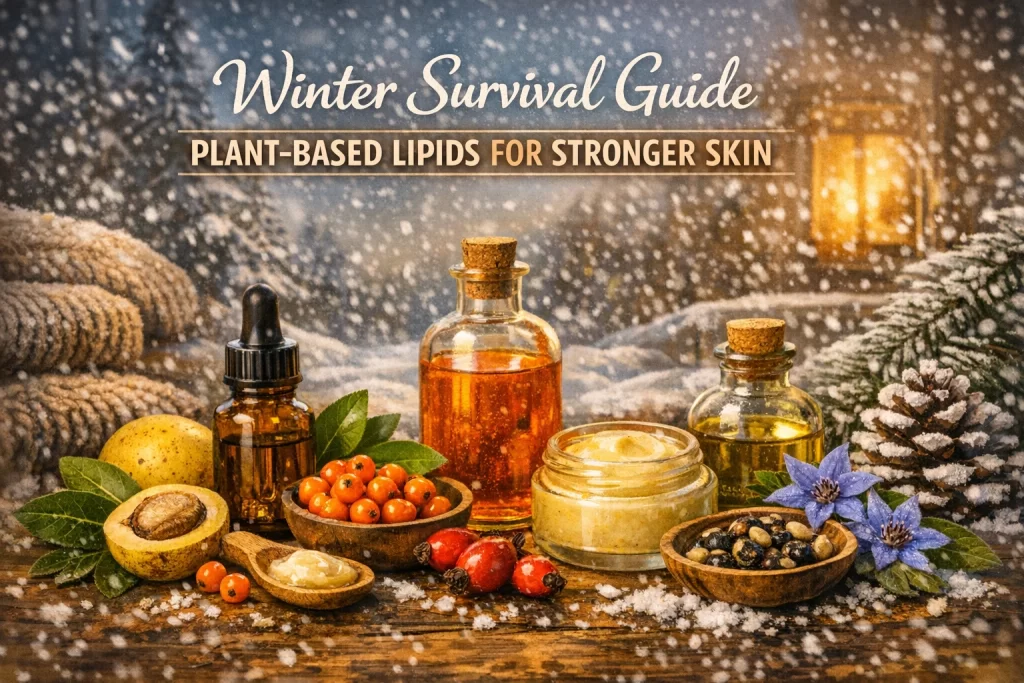
Winter is not just a season of cold; it is a season of extreme environmental stress for your skin. Between the biting outdoor winds and the bone-dry indoor heating, your skin is caught in a perpetual cycle of moisture loss. This guide explores the science of “Winter Xerosis” and provides a detailed roadmap for using plant-based lipids to maintain a resilient, glowing barrier until spring.
Part I: The Science of the “Winter Thief”
To fix a problem, we must first understand the mechanics of the damage. Why does skin that is perfectly healthy in July suddenly become red, flaky, and “tight” in January?
1. The Humidity Drop and TEWL
In winter, the humidity levels in the air plummet. According to the laws of physics, moisture moves from areas of high concentration to low concentration. Since your skin is roughly 64% water and the winter air is effectively 0% humidity, the air acts as a giant sponge, pulling water out of your cells. This process is called Trans-Epidermal Water Loss (TEWL).
2. The Lipid Synthesis Slowdown
Cold temperatures actually change the biology of your skin. Research shows that during winter, the skin’s natural production of ceramides, cholesterol, and fatty acids slows down. When these lipids are missing, the “mortar” between your skin cells develops microscopic gaps. These gaps are the primary reason why wind and pollutants can suddenly cause stinging and irritation.
3. The “Radiator Effect”
Forced-air heating is perhaps the greatest enemy of the skin barrier. It creates an environment that is even drier than the outdoors. Constant transitions from freezing outdoor air to hot, dry indoor air cause the capillaries in the skin to rapidly dilate and contract, leading to chronic redness and a “stressed” barrier appearance.
Part II: Beyond Squalane—The 5 Essential Winter Lipids
While Squalane is an incredible “gateway” lipid (as discussed in our The Ultimate Guide to Skin Barrier Health), winter requires a more diverse fatty acid profile. Think of Squalane as a light jacket; in winter, your skin needs a parka.
1. Marula Oil (The Occlusive Powerhouse)
Derived from the Marula fruit kernels of Southern Africa, this oil is a bio-compatibility miracle.
- The Chemistry: It is exceptionally high in Oleic acid (Omega-9) and Linoleic acid (Omega-6).
- The Winter Benefit: Marula oil is “thicker” at a molecular level than many other oils, meaning it provides a superior occlusive seal. It creates a breathable film that mimics the skin’s natural sebum, making it perfect for those whose oil production has slowed to a crawl.
- Best For: Extremely dry, “parched” skin that feels thin or paper-like.
2. Sea Buckthorn Berry Oil (The Healer)
Often called “liquid gold,” this vibrant orange oil is one of the few plant sources that contains the rare Omega-7 fatty acid (Palmitoleic acid).
- The Chemistry: In addition to Omega-7, it is packed with high concentrations of Vitamin E and carotenoids.
- The Winter Benefit: If you suffer from “windburn” or raw patches around your nose and mouth, Sea Buckthorn is the answer. It accelerates the healing of the stratum corneum (the outermost layer) and calms the “fire” of winter irritation.
- Note: Due to its deep orange color, it is best used at night or mixed into a cream.
3. Rosehip Seed Oil (The Regenerative Shield)
Harvested from the seeds of rose bushes, this oil is famous for its “dry oil” feel—it absorbs quickly but leaves a profound impact.
- The Chemistry: High in Pro-Vitamin A (Natural Retinol) and essential fatty acids.
- The Winter Benefit: Winter skin often looks grey or dull because cellular turnover slows down. Rosehip oil provides the regenerative benefits of Vitamin A without the irritation of synthetic retinols, ensuring your barrier remains thick and resilient.
- Best For: Mature skin or skin that suffers from post-winter dullness and fine lines.
4. Borage Seed Oil (The Anti-Inflammatory)
Borage oil contains the highest known concentration of Gamma-Linolenic Acid (GLA), an Omega-6 fatty acid that is critical for barrier health.
- The Chemistry: GLA is a precursor to anti-inflammatory prostaglandins.
- The Winter Benefit: If your winter skin tends to “flare up” with eczema, dermatitis, or unexplained red patches, your skin is likely GLA-deficient. Borage oil works from the inside out to suppress the inflammatory signals that winter air triggers.
- Best For: Reactive, sensitive, or itchy winter skin.
5. Jojoba Wax Esters (The Protector)
Technically, Jojoba is not an oil; it is a liquid wax ester that is 97% identical to human sebum.
- The Chemistry: It consists of long-chain fatty acids and alcohols.
- The Winter Benefit: Because it is so similar to our own skin oils, Jojoba can penetrate deeper into the follicle than heavier oils. It acts as a “delivery vehicle” for other nutrients while providing a silky, non-greasy protective barrier.
Part III: The 3-Step Winter Shield Routine
Applying a heavy oil randomly won’t solve a damaged barrier. You must apply your lipids in a specific order to “trap” the moisture.
Step 1: The “Damp Skin” Rule
Never apply oils or heavy creams to dry skin. After cleansing with a pH-Balanced Cleanser, leave your skin slightly damp. This traps a layer of water against the skin surface before you seal it off.
Step 2: The Humectant Base
Apply a water-binding serum. Look for ingredients like Glycerin, Panthenol (B5), or Hyaluronic Acid. Think of this as the “water” that your lipids will eventually protect.
Step 3: The Lipid Press
Warm 3–4 drops of your chosen winter oil (Marula or Rosehip) in your palms. Instead of rubbing, press the oil into your cheeks, forehead, and neck. This pressing motion helps the lipids integrate into the gaps of your skin barrier without causing friction-based irritation.
Part IV: Recommended Winter Essentials
Based on our strict bio-compatibility standards, these are the winter “must-haves” for a compromised barrier:
The Gold Standard: Drunk Elephant Virgin Marula Luxury Facial Oil
This is 100% unrefined, cold-pressed Marula oil. Because it is untouched by heat or chemicals, it retains the highest possible levels of polyphenols and antioxidants. It is the ultimate “one-ingredient” solution for winter.
The Nightly Treatment: Biossance Squalane + Vitamin C Rose Oil
By combining the lightness of Squalane with the richness of Rosehip and the antioxidant power of Chios Crystal Oil, this formula addresses both winter dryness and winter dullness in one step.
The Deep Repair: Weleda Skin Food Original
This “cult classic” isn’t a traditional oil, but it is built on a heavy base of pansy, calendula, and chamomile lipids. It is arguably the best “barrier cream” on the market for extreme cold. It creates a physical shield that cold wind cannot penetrate.
Part V: Common Winter Skincare Myths
Myth: “I have oily skin, so I don’t need lipids in winter.”
Truth: Oily skin can still be dehydrated. If your skin feels tight but looks shiny, your barrier is broken. Using a light lipid like Jojoba can actually help regulate your oil production and stop the “tight” feeling.
Myth: “Hot water is good for cleaning pores in winter.”
Truth: Hot water is a solvent. It melts away the very lipids (ceramides and cholesterol) that you are trying to preserve. Stick to lukewarm water—always.
Myth: “Face oils replace my moisturizer.”
Truth: Oils provide lipids (fats), but they do not provide hydration (water). You need both. Always apply your moisturizer first, then “seal” it in with your oil.
Conclusion: Embolden Your Barrier
Winter doesn’t have to be a season of skin suffering. By understanding that your skin is “starving” for lipids, you can provide the specific nutrients it needs to stay soft and strong. Whether you choose the healing power of Sea Buckthorn or the occlusive protection of Marula, the goal remains the same: Protect the barrier at all costs.
For more information on the “Big Three” lipids that make up your skin, head back to our Ultimate Guide to Skin Barrier Health.
Affiliate Disclaimer: As an expert resource, we recommend products that meet our high standards for bio-compatibility. If you purchase through our links, we may earn a small commission at no extra cost to you, which helps us continue to provide high-quality skincare education.