
While Squalane often gets the spotlight for its incredible bio-compatibility, it is just one piece of the lipid puzzle. During the winter, the air becomes a “moisture thief.” Cold outdoor winds and dry indoor heating create a relentless environment that siphons water from your cells, leading to what dermatologists call “Winter Xerosis” (severely dry skin).

To survive the season, your skin needs a diverse profile of fatty acids. Here are the five plant-based lipids that offer deep, bio-compatible protection beyond the basics.
Why Your Skin “Starves” in Winter
Your skin barrier relies on a specific balance of lipids to remain waterproof. In freezing temperatures, your skin’s sebum (oil) production can drop significantly. This leave “gaps” in your barrier, allowing moisture to escape and irritants to enter. Supplementing with plant oils that mimic your natural sebum is the most effective way to “patch” these gaps.
1. Marula Oil: The Fatty Acid Powerhouse
Marula oil is harvested from the kernels of the Marula tree and is exceptionally high in Oleic and Linoleic acids.
- Why it works: It is a “dense” lipid that provides an occlusive layer without feeling heavy. It is also packed with Vitamin C and E, providing antioxidant protection against winter pollution.
- Best for: Extremely dry or flaky skin.
2. Rosehip Seed Oil: The Regenerative Lipid
Rosehip oil is unique because it contains high concentrations of Vitamin A (natural retinol) and essential fatty acids.
- Why it works: Winter skin often looks dull. Rosehip oil helps with cellular turnover while reinforcing the barrier, ensuring that the “new” skin underneath is immediately protected.
- Best for: Evening out skin tone and repairing “cracked” skin texture.
3. Evening Primrose Oil: The Inflammation Soother
If your winter skin is red, itchy, or prone to eczema flares, Evening Primrose Oil is your best ally.
- Why it works: It is rich in Gamma-Linolenic Acid (GLA), an omega-6 fatty acid that the body cannot produce on its own. GLA is essential for maintaining the structural integrity of the skin barrier.
- Best for: Sensitive, reactive, or itchy winter skin.
4. Sea Buckthorn Berry Oil: The Nutrient Bomb
This vibrant orange oil contains the rare Omega-7 fatty acid, which is a key component of skin and mucous membranes.
- Why it works: It promotes rapid healing. If you have “windburn” or raw patches around the nose and mouth, Sea Buckthorn accelerates the repair of the skin’s surface.
- Best for: Healing damaged areas and intense nourishment.
5. Jojoba Oil: The Sebum Mimic
Technically a liquid wax, Jojoba is the closest botanical match to human sebum.
- Why it works: It “tricks” the skin into thinking it has enough oil, which prevents the overproduction of oil in response to dry winter air. It’s the perfect base lipid for layering.
- Best for: Combination skin that still gets dry in winter.
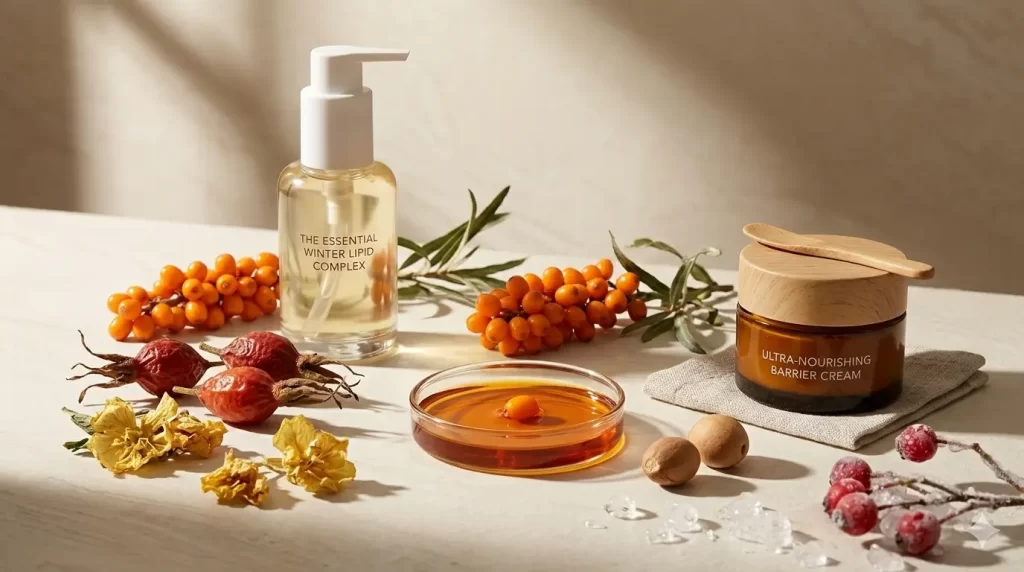
Recommended Winter Lipid Essentials
To help you weather the storm, we’ve selected these top-tier, bio-compatible oils available online:
The Luxury Recovery: Drunk Elephant Virgin Marula Luxury Facial Oil
This is 100% unrefined Marula oil, cold-pressed to retain its nutrient density. It is highly absorbent and leaves a noticeable glow without a greasy residue. It’s the perfect final step to seal in your moisturizer. [View Price and Availability Online]
The Organic Repair: Trilogy Certified Organic Rosehip Oil
A favorite worldwide, this oil is clinically proven to improve skin moisture levels and decrease the appearance of fine lines. It’s an essential for those living in high-altitude or extremely cold climates. [Check Current Pricing]
The Targeted Healer: Weleda Skin Food Original Ultra-Rich Cream
While it’s a cream, its formula is built on a heavy base of pansy, chamomile, and calendula lipids. It is a “cult” favorite for a reason—it creates a physical barrier against the elements that lasts all day. [Explore This Product]
How to Layer Lipids for Maximum Protection
To get the most out of these oils, you must follow the “Thin to Thick” rule:
- Hydrate First: Apply a water-based serum (Hyaluronic Acid) to damp skin.
- Moisturize: Apply your ceramide-rich cream (like the ones mentioned in our [Pillar Page]).
- Seal with Oil: Warm 2-3 drops of your chosen plant lipid in your palms and press them into your skin. This acts as a “top coat” that prevents your moisturizer from evaporating.
Conclusion: Don’t Let the Cold Win
Winter doesn’t have to mean dull, irritated skin. By understanding the diverse world of plant-based lipids, you can customize your routine to provide exactly what the season takes away.
Want to learn more about the science of these lipids? Read our full guide on The Ultimate Guide to Skin Barrier Health.
Disclaimer: As an expert resource, we recommend products that meet our high standards for bio-compatibility. If you purchase through our links, we may earn a small commission at no extra cost to you.